
India MICE Strategy: B2B Event Production in New Hubs
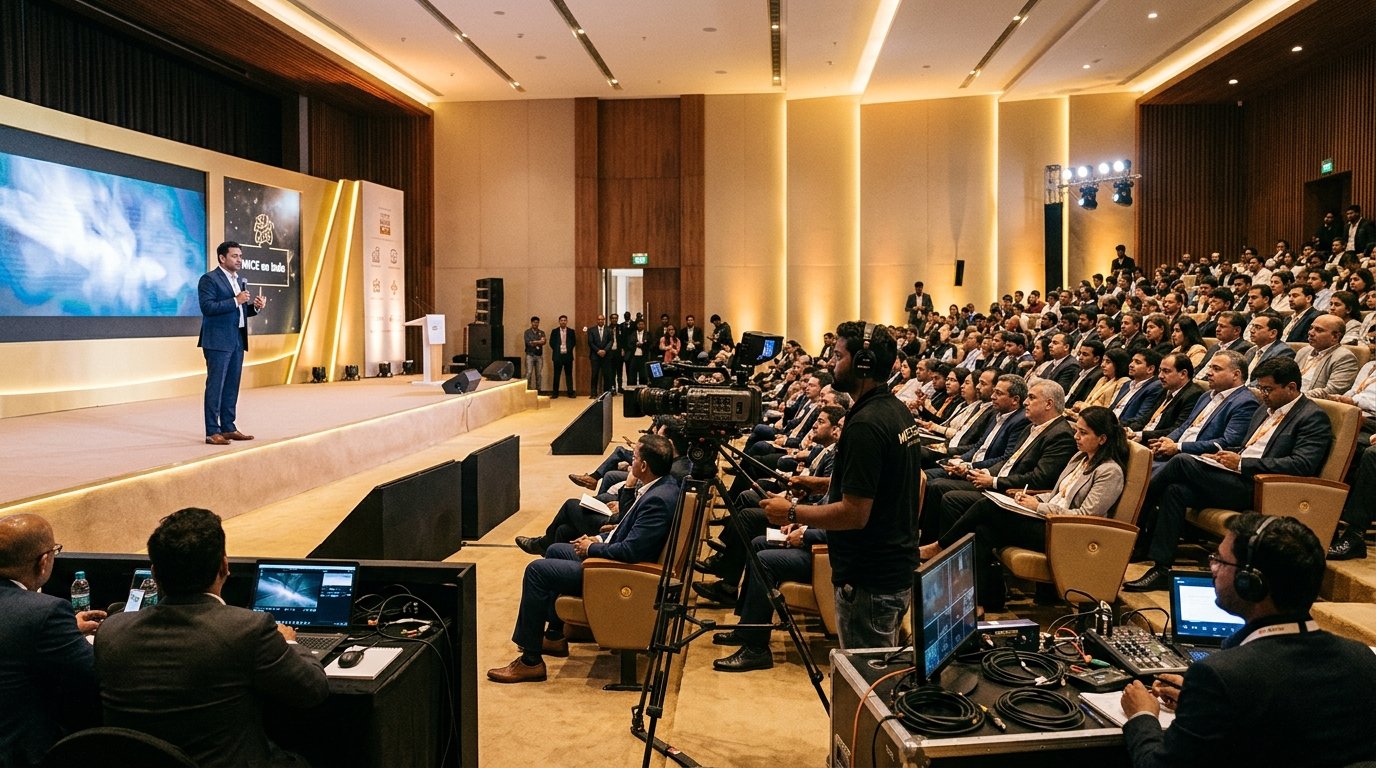
India MICE Strategy: B2B Event Production in New Hubs
A deep dive into India's aggressive MICE expansion, the reality of new convention centers, and the necessity of elite event production standards.
Is India truly ready to become a global MICE destination?
With a projected $103.7 billion revenue by 2030, India is no longer just a participant in the global MICE industry—it is aiming to lead it. The momentum generated by the G20 Summit last year served as a high-octane proof of concept, demonstrating that the country can handle the logistical weight of world leaders and global press. However, for the corporate decision-maker, the question isn't whether India can host a summit, but whether it can sustain a consistent, high-tier B2B ecosystem across its diverse geography. The government's bullish stance, led by tourism minister Gajendra Singh Shekhawat, highlights a doubling of revenue targets within the decade. This growth is anchored by the emergence of 'MICE-ready' destinations in cities like Varanasi, Khajuraho, and Kochi.
But we must look past the press releases. A successful MICE destination requires more than just a massive convention center. It requires a seamless integration of international flight connectivity, high-end hospitality, and, most importantly, a local vendor ecosystem that understands the nuances of B2B corporate culture. While the G20 proved that India can build the stage, the private sector is now asking if the daily performance will meet the expectations of Fortune 500 companies. The 'ground reality' often involves a gap between state-of-the-art facilities and the specialized services—like technical AV and editorial photography—that international brands consider non-negotiable.
For a Marketing Director or VP of Events, the risk isn't the venue itself; it's the execution within that venue. The ambition is clear, but the infrastructure for high-stakes corporate events is still catching up to the marketing. We are seeing a significant push to professionalize the sector, but planners must remain vigilant. The transition from hosting domestic trade fairs to international executive summits is a steep climb that requires more than just square footage. It requires a mindset shift toward service excellence and technical precision that matches global standards found in established hubs. This is the primary hurdle India must clear to move from a regional player to a global leader in the MICE sector.
What are the emerging trends shaping the MICE sector in India?
The diversification of event locations is the most prominent trend currently reshaping the Indian market. We are seeing a move away from the traditional hubs of Delhi and Mumbai toward specialized Tier 2 cities. This isn't just about cost-saving; it’s about creating unique, culturally rich experiences that serve as a backdrop for high-level networking. According to recent Industry discussion on India's MICE aspirations, the focus is shifting toward cities like Kochi for its maritime appeal and Varanasi for its spiritual heritage, integrated with modern convention facilities.
Another significant trend is the aggressive entry of international hotel chains like Meliá and Radisson, which are tailoring their offerings specifically for the Indian corporate traveler. These brands bring a level of predictability that international event planners crave. They are not just providing rooms; they are building mini-ecosystems designed for meetings and incentives. This trend aligns with the broader Global event trends and destination analysis which suggests that the 'destination' is now as important as the 'content' of the event.
Furthermore, there is an increasing demand for integrated technology within these new spaces. We are moving past basic Wi-Fi and projectors. The new standard involves dedicated broadcast studios for hybrid events and high-bandwidth capabilities for real-time global streaming. This technological leap is necessary because the modern B2B event doesn't end at the venue walls; it is a content engine for a global audience. The Indian market is beginning to realize that to attract the likes of Google, NVIDIA, or major financial institutions, the digital infrastructure must be as robust as the physical one. This shift is creating a massive opportunity for specialized AV production houses that can bridge the gap between local venues and international technical requirements.
How can international brands ensure premium event coverage in new global hubs?
As India scales its event infrastructure, the need for premium visual storytelling becomes critical. When a brand chooses an emerging hub like Kochi or Varanasi, they are taking a calculated risk on the 'new.' To mitigate this risk and justify the ROI to stakeholders, the visual output of the event must be flawless. You cannot rely on local generalist photographers who are used to weddings or local trade shows. High-stakes B2B events require an editorial eye that understands corporate branding, executive presence, and the fast-paced nature of a multi-day summit.
This is where the comparison with established markets becomes useful. For instance, Dubai's corporate event ecosystem has set a global benchmark for how infrastructure and high-end production work in tandem. In Dubai, the venue is only half the story; the other half is the world-class photo, video, and streaming services that ensure the event's impact is felt globally. India's new MICE hubs must aspire to this level of integrated service. For an international brand, ensuring premium coverage means bringing in partners who have a track record in these environments.
Professional visual coverage serves two purposes: it documents the event for internal archives, and it provides the marketing collateral needed to sell the next event. If the photography doesn't capture the scale of the new convention centers or the prestige of the speakers, the investment in the destination is wasted. High-end video recaps and same-day social cuts are now the standard for keeping a global audience engaged. Brands must prioritize vendors who can handle the logistical intricacies of new venues while maintaining a consistent, premium aesthetic that aligns with their global identity. The bridge between a 'new' destination and a 'successful' event is the quality of the content produced on-site.
Why does the 'ground reality' of a venue matter for high-end event production?
The 'ground reality' mentioned by industry insiders refers to the logistical friction that often accompanies new venues. This includes everything from acoustics in large halls to the reliability of power backups and the professional conduct of on-site staff. For high-end event production, these details are the difference between a smooth broadcast and a technical disaster. Alesia RSVP bridges the gap between massive new venues and the high-end aesthetic expectations of international B2B brands, ensuring that the scale of these events is matched by world-class photo and video production.
When we look at our production gallery, the common thread is the ability to make any venue—no matter how new or challenging—look like a world-class stage. This requires a deep understanding of lighting, sound, and movement within a corporate context
Questions Fréquentes
Quels sont les principaux hubs MICE émergents en Inde ?
Outre Delhi et Mumbai, les villes de Kochi, Varanasi et Khajuraho se positionnent comme des centres majeurs grâce à de nouvelles infrastructures de convention de classe mondiale.
Comment assurer la qualité de la production audiovisuelle en Inde ?
Il est recommandé de faire appel à des agences de production spécialisées dans le B2B international qui comprennent les standards esthétiques et techniques européens, plutôt que des prestataires locaux généralistes.